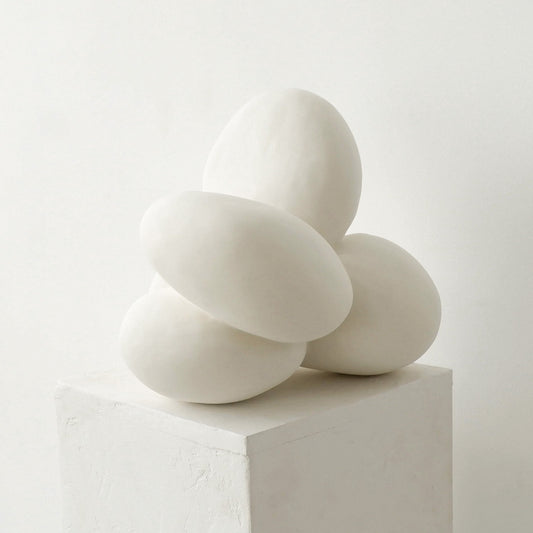
Hierarchies of Medium: Ceramics & Craft

Ceramics have historically been excluded from “high art,” or what some might call Art with a capital “A,” due to a centuries-old distinction between art and craft. This hierarchy positioned mediums associated with utility and domestic life—such as ceramics, textiles, and furniture—below disciplines like painting and sculpture, which were valued primarily for aesthetic contemplation. Because ceramics often take the form of everyday objects like cups, plates, and vessels, they have long been categorized as craft despite their rich artistic, cultural, and historical significance.

Today, one might find ceramics celebrated in museum collections of Ancient Greece, China, or Mesoamerica, yet contemporary ceramic artists still face many of the same assumptions. Often labeled “decorative” or “applied” artists, ceramicists continue to work within a medium that has historically been overlooked by institutions and critics. This history is also deeply connected to gender. As a field long associated with women and domestic labor, ceramics was frequently undervalued within a fine art canon that largely centered male artists and traditionally masculine forms of creative production.

Despite these outdated distinctions, contemporary ceramicists continue to expand what clay can be. Moving beyond functionality, artists use the medium to explore personal narratives, cultural identity, memory, landscape, and emotion. Through experimentation with form, texture, surface, and scale, clay becomes a vehicle for storytelling and inquiry rather than simply utility. In doing so, ceramic artists challenge the boundaries between art and craft altogether.

This is evident in the work of Meagan Cignoli, a Los Angeles–based artist whose ceramic practice is intuitive and materially driven. Her work emphasizes emotional resonance and sensory experience, exploring themes of impermanence, vulnerability, and the tension between holding on and letting go. Through clay, she transforms ordinary materials into objects that invite reflection, connection, and presence.

Perhaps the question is no longer whether ceramics belong within the world of fine art, but why we continue to maintain the distinction at all. Some of humanity's oldest creative achievements were made from clay. Across cultures and centuries, ceramic objects have carried stories, preserved histories, marked rituals, and shaped daily life. Their significance has never been limited to function alone.

Hierarchies in art are slow to change, but they begin to shift when we look more closely. Ceramics are more than objects—they are a language of form, memory, and touch that connects the everyday to the extraordinary.

SHOP: Meagan Cignoli , Elena Mahno, Lodo, C.F Edition , Eve Palguta , Laura Estela Huerta , Caro Cortella
Explore our ceramics collection at Two Faced Gallery.
More from our Newsletter
-
-
Vendor:Jess Sasso
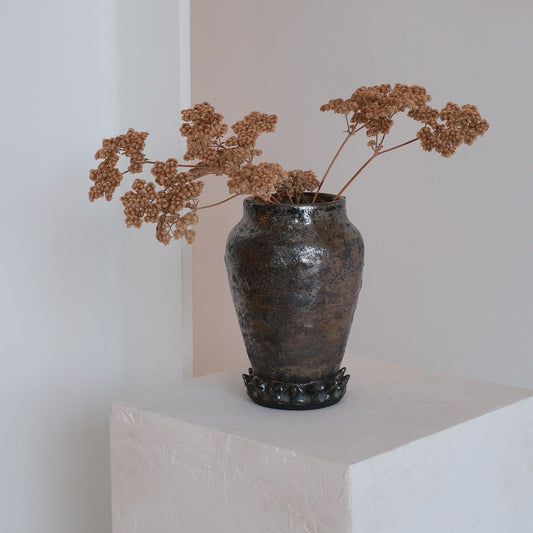
Ankathi Sculpture
Regular price $375Regular priceUnit price per
 Sold out
 -


-

-
-


-
Vendor:Eve Palguta
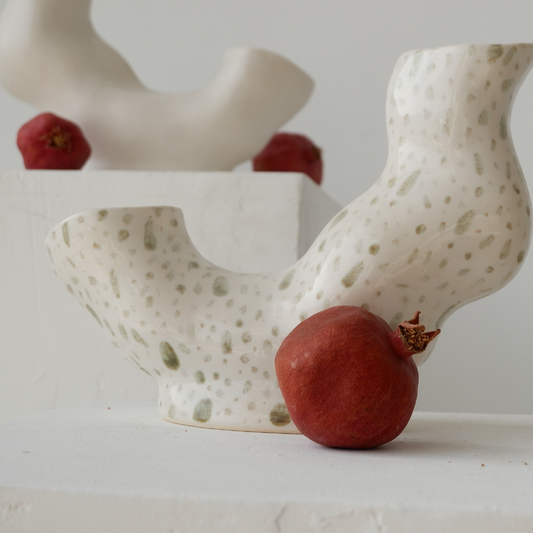
Genie in Matte white
Regular price $200Regular priceUnit price per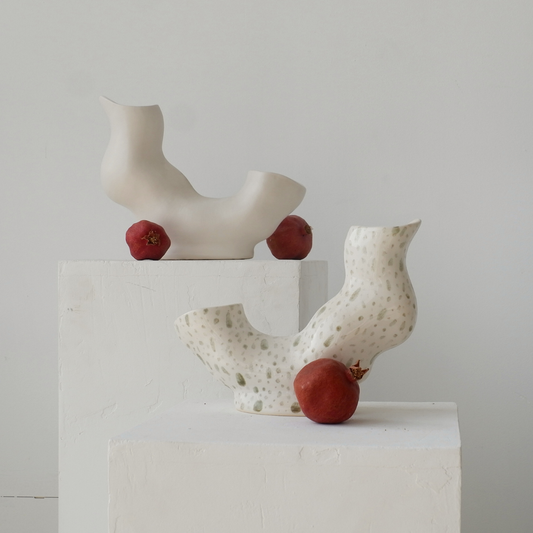
-
-
Vendor:Jess Sasso
Skasila
Regular price From $500Regular priceUnit price per

-
Vendor:CF Edition
Small Ritual Object
Regular price $125Regular priceUnit price per

-
Vendor:Eve Palguta
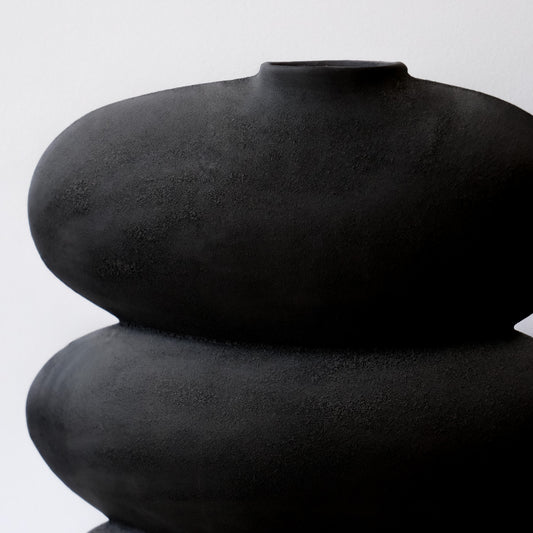
Moon Rock Stacked Pebbles
Regular price $550Regular priceUnit price per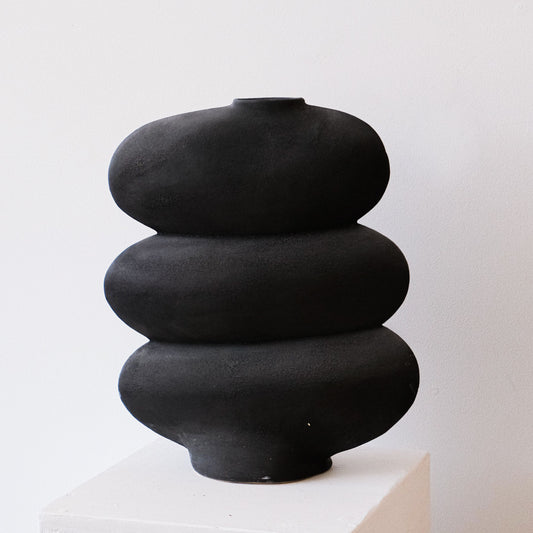
-
Vendor:Meagan Cignoli
5 Balloons
Regular price $2,000Regular priceUnit price per